Managing emotions

Am I depressed? One Quick Tip to Tell if You Have Depression

You know something feels off, you don’t feel like yourself. People closest to you say you’re moving a bit slower or smiling a bit less. You don’t have the same energy, you feel more irritable, or concentration is hard. You want to regain control of your life, to feel like you’re getting somewhere, but an unwelcome cloud in your mind is holding you back. So you’ve found yourself wondering: 

“Am I depressed?”

“How will I know if I’m depressed?”

“And what should I do about depression?”

We’re going to explore one method you can use to test if you’re suffering from depression. My hope is to help you take the first step in naming your experience so you can be empowered to decide what to do about it. 

Young worried woman thinking of something while calculating her home budget.

Testing for Depressed Mood

I invite you to think of the next five minutes as an opportunity to engage in a conversation with yourself. Listen to the categories we’re going to cover, ask yourself not only if you relate, but also how you feel about relating. 

The American Psychological Association counts out 9 potential symptoms of a major depressive episode. 

I’m going to break down all 9 as you count how many apply to your experience: 

  1. Do you experience low mood most of the day on most days? This could feel like sadness, but it could also feel like emptiness or hopelessness. Some might feel numb or emotionless, others may burst into tears. In minors this can even look like irritation. 
  2. Do you experience a diminished interest or pleasure in things you feel you’d normally enjoy. Maybe the same pleasureful respites don’t cut it anymore, or maybe you’re finding yourself avoiding them altogether.
  3. Is your appetite more or less than it should be? This is one that can confuse people. Some experience an increase in appetite or weight gain during depressed mood. Others might experience a decrease in appetite or a decrease in weight.
  4. Are you sleeping less or more than you need? Similar to number 3, this is a time when either way isn’t helpful. Maybe you’re experiencing insomnia, which looks like either difficulty initiating sleep, difficulty sleeping in the middle of the night, or waking too early with an inability to go back to sleep. Or maybe you experience hypersomnia, defined as 10 hours or more of combined sleep in a 24 hr period. 
  5. Are your movements slower than usual? Or are they more restless and agitated than usual? What do your friends notice? 
  6. Do you experience fatigue or a loss of energy most days?
  7. Do you feel a sense of worthlessness or inappropriate guilt? 
  8. Is your concentration or decisiveness slowed?
  9. Do you find yourself thinking often of death or experiencing a wish to not be alive anymore?

If you have 5 or more symptoms, you may be experiencing a major depressive episode. For many, this is a hard truth to realize, but there’s no reason for you have to wrestle through this by yourself. And while no questionnaire or test is the same as a diagnosis, my hope for you is that you feel you have a starting point as you begin speaking with a therapist. 

But whether or not you came up with 5 depression symptoms, I’d invite you to ask yourself what this exercise brought up for you.

There’s no harm in asking a therapist for a free consultation to see if you might be a good candidate for a little extra help. All therapists at Here Counseling offer free consultations, and if we’re not the right therapist for you, we can help you find someone who is. 

Wherever you are, whatever your experience, take hold of the reins of your life once more, and watch the days get a little bit brighter. 

Am I Depressed? Worksheet

Want these questions in an easy to use free downloadable worksheet? This worksheet will help you take steps forward in dealing with anxiety. You’ll also get access to all our worksheets in Here Counseling’s Resource Library!

Gavin Cross
Gavin Cross

I help people make sense of their present to find hope for their future.

Read More
Managing emotions

Helping Teenagers Sleep Better

Teenagers often struggle to get enough good sleep. It may take hours to fall asleep or they might wake up in a panic in the middle of the night. Sometimes they sleep ok but always feel tired. Teenagers still need 8-10 hours of sleep per night, even though their internal clocks have shifted to not get tired until later in the evening. Without enough sleep, school gets harder, focusing and memorizing are difficult and mental health is impacted. Not getting enough sleep can make all of us (adults and teens) more irritable, sad or anxious. 

If you are a teenager or the parent of a teenager who is struggling with sleep, here are a few things that you can do to help. 

Set a Sleep Schedule 

Going to bed at the same time every night and getting up at the same time every morning improves your sleep. Your body will get into the habit of falling asleep at that time and wake up feeling more refreshed in the morning. If you can, keep that schedule on the weekend as well (or sleep in no later than 1 hour), in order to help you get better sleep throughout the week. 

Start a Calming Bedtime Routine 

Your brain relies a lot on external cues to tell you when it is time to sleep. That is why you might feel tired earlier in the winter when it is dark so early. Our bodies use light to determine when we sleep but it can rely on other cues as well. So establishing a bedtime routine prepares your brain for sleep. Routines like putting on pjs and brushing your teeth help you start unwind and relax. But you may consider expanding your routine to include a few more things. 

Here are some ideas: 

  • Drink hot herbal tea
  • Journal 
  • Read a favorite book 
  • Listen to calming music 
  • Start a diffuser of essential oils 
  • Put on lotion 

Doing these activities consistently as part of your nightly routine communicates to your body that it is time to sleep and helps you fall asleep sooner. 

Reduce Screens 

The light from screens (including phone, TV etc.) mimics natural light and wakes up our brains. If you are having a hard time falling asleep, turning off all screens an hour before bedtime can make a big difference. 

Avoid Homework in Bed 

When you do school work, your brain becomes more alert, focused and possibly more stressed or frustrated. If you are doing school in the same place where you sleep (on or in your bed), your brain will associate your bed with school. As a result, when you lie down to sleep, you might start thinking about school or start feeling stressed and alert. Doing activities you enjoy on your bed, like talking to friends or watching TV can have a similar effect of keeping you awake as well because those activities make you excited and energized. As much as possible, only use your bed for sleep and relaxing activities. Anything that is stressful or exciting will keep you awake later on. 

Increase Physical Activity 

Being active and getting outside during the day can also help with sleep. Take a walk, go for a jog, jump on the trampoline, shoot hoops, chase your dog, dance! Anything that gets you moving during the day will help you sleep at night. Just avoid doing these things right before bed or in the evening, because that might wake you up more. 

Get support

If you are feeling a lot of stress, worry, sadness or loneliness, your mental health may also be impacting your sleep. If you try these things and are still struggling, reach out to a therapist for support. Learning to cope with whatever is going on for you can help you feel better and improve sleep. 

So I encourage you to try one or two of these strategies (or all of them! Why not?) and ask for help if you need more support. 

Help Your Teen Sleep Worksheet

Want these questions in an easy to use free downloadable worksheet? This worksheet will help you take steps forward in dealing with anxiety. You’ll also get access to all our worksheets in Here Counseling’s Resource Library!


Melissa Winfield, PsyD

I help children, teenagers and parents find hope and resilience through the tough times.

Read More
COVID, Managing emotions

Why Depression May Feel Stronger this Season, and Two Ways to Increase Your Emotional Resilience

Depression can feel overwhelming during the holidays. There’s a few reasons for that. Our traditions and gatherings can usually remind us not only of the ways we are connected and grateful, but also the ways we can sometimes feel alone and isolated as well.

This holiday brings with it an uninvited guest: a recognition that for many of us, this year has been difficult, and at times has felt hopeless. On top of these kinds of economic and health realities, we can recognize that we’ve been lonely.

Our brains were meant for daily social connection

The largest part of our brains is the cortex. That’s the rich, folded external part of our brains responsible for all of our higher order planning, thinking, language, and visual-spacial awareness. The purpose of this part of the brain isn’t simply for accomplishing tasks.

The purpose of this important part of our brain is to keep us connected to a social group.

Our cortex is built for constant and intricate interactions with other people. Picture a 150 person closed-network group of people – similar to tribal cultures. Each person knows each other, each person has a role, a sense of how they belong and function together. Together they have some sense of their shared world and place in it. They have stories and myths, they have unfolding drama and conflict between members, and ways of moving through these conflicts toward resolutions.

Pre-COVID, our social environments tend to be more urban than tribal. The social connections that fed our cortexes came instead from affinity groups, churches, work environments, and gyms. These give our lives meaning, they give us purpose, and identity. When we feel we belong to a community, we know our role, we get clear signals about our identity within that group, and we feel we’re moving toward some shared purpose that’s larger than ourselves.

This season, our brains are starved for social connection, and it’s making us depressed.

While this seems an obvious connection, I believe we can also tend to dismiss the weight these social interactions hold for us.

When we don’t acknowledge the importance of our social groups, we tend to shame ourselves and others for missing friends. We can interpret these kinds of feelings or needs as a disregard for public health. However, it’s normal to be sad and crave things like dinner parties and baseball games, just like it’s normal to be thirsty or hungry.

Our hunger for social interactions is a survival instinct. It’s telling us that we’re vulnerable, that we’re alone in a threatening world.

Loneliness and Hopelessness Contribute to Depression

Depression is a clinical term that describes a certain prolonged experience of low energy, sadness, lack of pleasure and hope for the future. For some of us who have a tendency toward depression, there are some environmental pieces that will trigger a depressive episode.

The two factors that may especially contribute to triggering a depressive episode this season are isolation and hopelessness. We’ve already talked a bit about isolation, how our sense of belonging to a group of people can insulate us from depression and meaninglessness.

Hopelessness is the experience of not being able to imagine the end of suffering. Human beings can be incredibly resilient when we can envision an end to our suffering. When we can see a light at the end of the tunnel we can endure incredible challenges, just like a marathon runner can push toward the finish line because she can imagine a defined point at which the pain in her legs will stop.

Because we don’t know when the pandemic will end, we can feel hopeless. When we don’t know how long to social distance for, or when we’ll be able to see family again, we can tend to be overwhelmed by depressive feelings.

Two Ways to Increase your Emotional Resilience

So what do we do? While no solution will bring back the social connections we’re craving, our best tool is to hold onto a few things that help us endure the pain of being apart.

First of all, it’s important to not throw out our normal traditions. Talk with friends and family and be creative with a socially-distanced version of your normal traditions. While there may be an element of sadness to not being together, practicing the tradition will help us to remember important moments of connection with those closest to us.

Second, talk with family and friends to plan a time in the future to celebrate once it’s safe. Just like a marathon runner needs a clear, defined end to their pain to keep going, we need to clearly imagine a point at which we can come back together and celebrate. Plan a trip or visit to reconnect with others in the future – talk about what kind of meal or activity you’ll do. The more clearly you can imagine and plan for this moment, the more it will increase your emotional resilience in this time.

What could this look like for your immediate family? For your friend group? For your work life?

In the meantime, if you’re struggling today with depressive feelings that are overwhelming, give us a call. Therapy can help you move through these feelings and recover a sense of hope and meaning.

Connor McClenahan, PsyD

I help lawyers and other professionals overcome difficult emotions and experience meaning and purpose in their lives.

Read More
coping with grief
Managing emotions

Coping with Grief during the Holidays

You may be dreading the holidays this year, or just not as excited as usual. This is a normal response if you have lost a loved one or something important to you, whether it was this year or years ago. Anniversaries and holidays bring up memories and feelings that can be painful and hard to cope with. 

What to Expect from Grief 

Grief is a deeply individual experience based on your relationship with what or who you lost.  Grief looks different for everyone and is never easy or predictable. There is no timeline for grief or a time when you are “supposed” to be done grieving. Though there is no right or wrong way to grieve, there are some things that you can do to help in the healing process. 

5 Ways to Cope with Grief 

1) Recognize How Grief Impacts Other Emotions

When we are grieving, our emotions may be unpredictable. We may feel more sad, angry, fearful, or numb than usual. Things that usually do not bother us may feel like a big deal or cause more pain than usual. Acknowledging that our emotions are being triggered by grief and accepting that we are hurting is the first step in more effectively coping with grief. 

2) Get Support

Find support from people who care about you. It can be easy to isolate while you are grieving but is better to let others share the grief with you and be there for you. Talk about your loss if you need to or just enjoy spending time together. If you don’t have anyone who will be able to support you, consider joining a support group. 

3) Take Care of Yourself

Grief can take an emotional and physical toll. You may feel more exhausted, get a cold more easily or have difficulty sleeping. Allow yourself the time to do what you need to do to be ok, whether that is resting, journaling, faith practices or being physically active. Keep up regular routines as much as possible while also recognizing that simple things may be harder for a while. 

4) Honor their memory 

An important part of healing from grief is being able to identify new ways to relate to and remember the person you have lost. Honoring their memory may help you feel connected with them and able to integrate who they were into your life now. There are a lot of creative things you can do to honor their memory. 

Here are a few ideas: 

  • Create a journal or scrap book of memories
  • Start a tradition that brings family members together 
  • Do an activity that they loved (cooking, listen to their favorite music, decorating etc.) 
  • Do an art project that reminds you of them 
  • Donate to a charity or cause that they cared about 

5) Meet with a therapist 

Though grief is an expected and natural experience, sometimes the additional support from a therapist is needed. If you are having a hard time functioning and completing daily tasks, are feeling hopeless and not sure if life is worth living, or feel like there is no one you can trust after your loss, you may want to consider meeting with a therapist. 

Experience Joy Again

The pain of grief may feel overwhelming and endless. But getting the support you need and following these steps can help you find healing and hope. It is important to recognize the significance of the loss but also be able to live with joy and purpose again. Don’t suffer alone! Call us today if you need support from experienced therapists. 

Melissa Winfield, PsyD

I help children, teenagers and parents find hope and resilience through the tough times.

Read More
COVID, Parenting

Want to Calm the Chaos at Home? It starts with 3 things you can do with your child today.

Life can feel really chaotic right now with all the changes due to COVID this fall and getting ready for a potentially difficult (or at least different!) holiday season. Things with our kids can feel out of control as well, whether it is managing their feelings or redirecting their behaviors. In these difficulty times, we easily lose sight of what really matters, like having a strong connection with your child. We often forget that a warm relationship goes a long way to help with problems that we face. 

Benefits of Focusing on Relationship with your Child

Establishing a positive and supportive relationship with your child helps in these ways: 

  • Increases their sense of safety and security
  • Reduces anxiety and stress 
  • Helps you feel more confident in your parenting 
  • Increases self-esteem 
  • Reduces conflict 
  • Helps kids accept limits and disciple

How to Build a Strong Relationship with Your Child 

Strengthening your relationship can be like taking a daily multivitamin or exercising….you may not see the impact right away but overtime it makes life a lot easier and healthier. And hopefully you can also have some fun with it along the way!

Here are three things that you can start doing today: 

Start One-on-One Time 

I mentioned in a previous blog that daily one-on-one time reduces unwanted or problem behaviors. It also helps parents and children feel closer and more secure in their relationship. 

Choose at least 5 minutes per day that you can spend with your child one-on-one without distractions. Finding a short time daily and having it be part of your routine can be more helpful than waiting until you have a full afternoon on the weekend. During this special time, avoid criticism and choose something to do that you and your child will enjoy. If you are having fun and able to be enthusiastic, that will communicate to your child that you are there for them and enjoy being with them. 

Here are some ideas for daily one-on-one time: 

  • 5 minutes of joining your preschooler in what they are playing 
  • Read a bedtime story
  • Stay up to talk with your teenager before going to bed 
  • Drawing or coloring with your child 

Schedule Family Time 

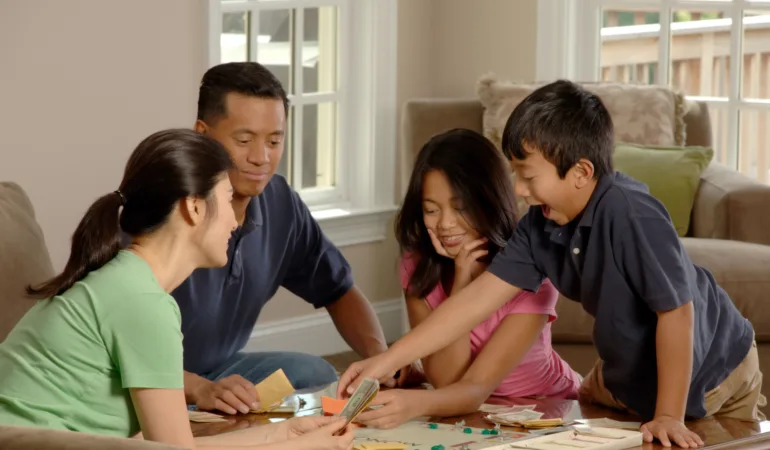
Find a time for the family to do something fun together. This could be something routine like family dinner a few nights per week or a fun activity on the weekend like game night or family bike ride. Choose something that is fun for everyone or take turns deciding on the activity if your kids have a hard time agreeing. Identify activities that you can do on a consistent basis based on your family budget and weekly schedule.  

Regular family time helps to reduce conflict and also helps kids feel less socially isolation. Giving the family something fun to do together is a great way to bond and help everyone feel better. 

Here are some ideas of activities to do as a family: 

  • Family game night 
  • Movie night
  • Trip to the park
  • Bike ride/walk
  • Family Dinner 
  • Pancake breakfast on Saturday
  • Go get ice cream or Starbucks as a family  

Increase Labeled Praise 

Lastly, increase how often you praise your child throughout the day. Labeled praise means being specific about what you appreciated that your child did. Instead of more general praise like “Good job” or “You had a good day,” praise what your liked that your child did. For example: “I loved it when you used gentle hands with your sister” or “Thank you for picking up your trucks when I asked.” Being specific helps your child know what exactly you liked and will help them do that action more often in the future. Praise also helps your kids feel better about themselves because you are calling out something that they did well. 

To help increase how often you praise, find a time during the day that you are going to praise as often as you can. This could be during your one-on-one time or a time of the day that is tough, like the morning or a transition from free time to homework. See how often you can give praise, even if it is for something small. 

Relationship is a Powerful Tool for Your Child

Increasing praise and routine time with your child individually and as a family all go a long way to help your relationships. It also increases your confidence as a parent and your ability to enjoy being with your child! Choose something to start implementing today to help support your child through the powerful tool of relationship. 

Calm the Chaos at Home Worksheet

Want these questions in an easy to use free downloadable worksheet? This worksheet will help you take steps forward in dealing with anxiety. You’ll also get access to all our worksheets in Here Counseling’s Resource Library!


Melissa Winfield, PsyD

I help children, teenagers and parents find hope and resilience through the tough times

Read More
Anxiety, COVID, Managing emotions, Neurology

Setting a Centering Affirmation: How 1 Minute in the Morning Can Set You up for Success All Day.

Stress is everywhere these days. 

  • You’re trying to stay afloat economically. 
  • You’re concerned for the safety of your loved ones. 
  • Some days just seem doomed from the start no matter the effort. 

This toll on your body and mind diminishes your sense of hope and peace, until you find yourself grasping to the idea that the best you can hope for is to find rest some day in the future, because it sure doesn’t seem reachable today.

What’s happening in your brain and body?

Thankfully, this is a pattern you can break. Our brains are wired to fall into the same paths each day. If those paths gravitate towards stressful or depressive thoughts, then those are the directions our minds want to keep taking. 

Imagine sledding in the snow. The first few times you take a path down a hill, it’s a little slow, a little difficult. But the more you take the same path, the snow gets worn down, solid, and lightning fast. This is what’s happening in your brain every time stress or depression try to have their way. This then has greater implications for your health.

  • Muscle tension.
  • Gastrointestinal issues.
  • Fatigue.
  • Insomnia.
  • Weight gain.
  • Extreme weight loss.

None of these things contribute to an experience of peace in your life. 

What can you do about it?

Stress and depression are usually accompanied by a small nagging voice that threatens your identity or safety. This lie about yourself can be identified with a negative “I am” statement. 

  • I’m unloved. 
  • I’m a failure. 
  • I’m not safe.

You get the point.

So FIRST I want you to take just a moment to quiet your mind, and ask your stress what negative message it’s trying to communicate to you today about yourself. 

NEXT, ask yourself what positive message you’d rather believe about yourself instead. What centering affirmation do you need to set to feel empowered for the rest of the day? These affirmations are meant to answer the negative message from above. Here are some examples.

  • I am loved.
  • I’m important. 
  • I do the best I can.

Choose the positive voice that speaks to that part of you that needs hope today. 

LASTLY, and this is key, remind yourself why this centering affirmation is true. When you say “I’m loved”, whose face comes to mind? When you say “I’m a success,” allow your mind to venture to the times you made something happen, instead of dwelling on the times you didn’t. When you tell yourself “I matter,” picture the reason you matter.

Why should you set a centering affirmation each morning?

These three steps: 1) asking what negative message stress or depression are trying to share, 2) asking what centering affirmation combats that negative message, and 3) reminding yourself why your centering affirmation is true, will take you about a minute once you get used to the practice. 

Returning to the sledding metaphor, your mind will continue to prefer its old paths for a while. As you practice this new preferred path, the path that leads to peace, what you’ll experience at first is a lot like dragging a sled down the stubborn fresh snow. The more days you choose the better path, the more solid it will become, the faster your brain will naturally make more positive connections. And before you know it, that old path won’t be so well-worn, and your brain will prefer to operate out of your centering affirmation.

Now that you’ve set your centering affirmation, you’ll want to come back to it occasionally throughout your day when the normal stresses of life show up, as they always do. Just a simple deep breath will do, inhale the centering affirmation, exhale the stress, and move on with your day. 

Taking the next step

Sometimes, you’ll find stress seems beyond what you can manage. Maybe you poured your heart out to a trusted companion and you still feel awful. Or maybe the negative thoughts seem too numerous to count. If you need to discuss therapy as a potential option for you, contact us for a free consultation to discuss your best options. We’re more than happy to help you get set up with the right person. I help with anxiety, healing from trauma, and connectedness in relationships. And together with my colleagues we can help you make sense of any number of other concerns. 

Be free to live again.

Now go and walk in your centering affirmation for the rest of the day. Let this be the voice that sets the background music of your life. And send a clear message to your stress and depression that they don’t get to call the shots anymore. 

Setting a Centering Affirmation Worksheet

Want these questions in an easy to use free downloadable worksheet? This worksheet will help you take steps forward in dealing with anxiety. You’ll also get access to all our worksheets in Here Counseling’s Resource Library!

Gavin Cross, AMFT
Gavin Cross, AMFT

I help people make sense of their past to find hope for their future.

Read More
ADHD Therapy - woman in chair with therapist
Parenting, Testing and Assessment

Pre-Adoption Psychological Evaluation: Helping You Prepare for Adoption

Adoption provides an incredible opportunity to give a loving home to a child in need and to grow your family. But you are ready to take on this adventure, there can be a lot of hoops to jump through first.  And on top of all the red tape, international adoptions often require a psychological evaluation for the adoptive parents.

Here’s what you can expect in a pre-adoption evaluation.

Why Do I Need This before I can Adopt? 

The ultimate goal of the evaluation is to make sure that every child is matched with a home that will be warm and nurturing. Unfortunately, some adoptions have resulted in placements where children have been neglected or abused because parents did not have the capacity for appropriate care.

The psychological evaluation is one way to screen parents to make sure that they are ready to take on the challenges of parenting for the first time or to add another member to their family. If mental health concerns are present in the family, the evaluation can help ensure that these concerns are caught early and that parents have the support they need to be successful. 

The Process of the Pre-Adoption Psychological Evaluation 

Pre-adoption evaluations usually consist of a clinical interview and one or more psychological tests that help determine mental health concerns. The clinical interview will be conducted both with the parents together and separately. The interview is a necessary part of the evaluation so that your psychologist understands your context and story when they interpret test results. This enables them to provide accurate feedback and give recommendations tailored to your needs. 

Psychological tests may include the MMPI, which is a standard personality test, though other tests may be used instead of or in addition to the MMPI.  The MMPI is a true/false questionnaire that will ask all kinds of questions, many of which seem irrelevant. It is designed to identify mental health concerns and will be interpreted by your psychologist to determine any issues that need to be addressed. 

This is not a test for which you can study or prepare. All questions ask about your preferences and experience. Trying to decipher what the test questions could mean will only cause unnecessary anxiety and possibly unhelpful results. Do your best to give accurate and honest answers without worrying about what each question is getting after. 

We offer pre-adoption psychological evaluation services in California. You can book a free call today to see if we’re the right people to help you.

Pre-Adoption Evaluation StageKey Details
1. Free Consultation CallDetermines fit for your needs, establishes expectations and scheduling.
2. Clinical InterviewConducted jointly and individually with parents to gather context, personal story, and needs for accurate test interpretation and tailored recommendations.
3. Psychological AssessmentInvolves tests like the MMPI (true/false questionnaire) or others to detect mental health issues; answer honestly without preparation or overthinking.
4. Follow-Up FeedbackSchedule a session to review results, discuss concerns, provide recommendations, and answer questions for proactive issue resolution.

Results Help Your Adoption Succeed 

After the interview and tests are completed, your psychologist will create a report that meets the requirements of the country from which you are planning to adopt. We may request written permission from you to speak with your adoption agency to make sure that we are meeting all requirements. 

After the report is completed, your psychologist will schedule a follow up appointment to give you feedback on your results. This will include discussion of any concerns that may have come up and recommendations for what will help you be successful in your adoption. We want to make sure that you understand the information being provided and have time to ask any questions you may have about the results. 

Pre-Adoption Psychological Evaluation Support  

At Here, our psychologists understand that it can be stressful completing these evaluations. It may seem like just another “to-do” before you can be a blessing to a child. Our goal is to make this as stress-free as possible by letting you know up front what to expect. Our recommendations are created to help you be proactive in addressing needs that you may have now and anticipate any challenges. This support will help make your transition to welcoming a new child into your home a smoother experience. 

Learn more about our assessment services.

therapy for anxiety

Here Counseling in Pasadena and Los Angeles

We provide pre-adoption psychological evaluations to help families efficiently meet adoption requirements.


FAQ about Pre-Adoption Psychological Evaluations

Why do I need a pre-adoption psychological evaluation?

The evaluation ensures that adoptive parents are prepared to provide a warm, nurturing home for the child. It screens for any mental health concerns to prevent potential neglect or abuse and helps catch issues early, providing necessary support for successful parenting.

What does the pre-adoption evaluation process involve?

The process typically includes a clinical interview (conducted both together and separately with the parents) and one or more psychological tests, such as the MMPI. The interview provides context for interpreting test results, leading to tailored recommendations.

What psychological tests are used in the evaluation?

Common tests include the Minnesota Multiphasic Personality Inventory (MMPI), a true/false questionnaire designed to identify mental health concerns. Other tests may be used in addition or instead, depending on the psychologist’s approach.

How should I prepare for the psychological tests?

You can’t study or prepare for these tests, as they focus on your preferences and experiences. The best approach is to answer honestly and accurately without overanalyzing the questions, as trying to “figure them out” can lead to unnecessary anxiety and inaccurate results.

What happens after the evaluation is completed?

The psychologist will create a report that meets the requirements of the country you’re adopting from. You’ll have a follow-up appointment to review the results, discuss any concerns, and receive recommendations. They may also coordinate with your adoption agency with your permission.

How can the evaluation support my adoption journey?

The evaluation aims to make the process stress-free by providing proactive recommendations to address current needs and anticipate challenges. This helps ensure a smoother transition when welcoming a new child into your home.

Where can I get a pre-adoption psychological evaluation?

Services are available in California through our practice. You can book a free consultation call to determine if we’re the right fit. Learn more about our assessment services or schedule a free consultation.

Read More
Anxiety, Managing emotions, Neurology

Spending too much time on social media? Instead of a detox, try this

Sometimes your phone can feel needy. It demands your attention and pulls you away from time you wish you could enjoy. You find yourself constantly opening your apps, scrolling mindlessly through your feeds. It might be hard to notice how much time has passed!

You wish you could have a different relationship with social media.

Why social media captures our attention

Everyone around you is always on Instagram, Snapchat, TikTok, Facebook etc. and constantly posting about their lives. It’s how you stay in the know. Watching people’s stories and looking at their posts keeps you feeling like you’re in the loop.

Social media hijacks our entire outer shell of our brains, called the cortex. The main purpose of our cortex is to pay attention to our place in social networks to stay safe. Social media piggy backs on our survival instinct to stay connected and aware of our social situation.

It has been estimated that seven in ten Americans use social media as a way to connect with others, stay informed with news content, and entertain themselves. A recent study found that social media users spend an average of 2 hours and 24 minutes per day on an average of 8 social media and messaging apps

It makes sense – we’re really looking for safety in a social group.

What’s the problem with using social media?

Even though social media gives you a glimpse into the lives of your friends, family, and even strangers, it’s not a real, meaningful way of connecting with those individuals.

You often are not actually connecting with those individuals and engaging in thoughtful conversation that creates the basis of deep friendships. Instead, the mindless scrolling through social media, that so many of us are familiar with, can contribute to feelings of insecurity or loneliness.

It doesn’t have enough “bandwidth” to help us ever feel secure and connected.

So what can be done?

Tip #1: Take time off social media. Like a vacation! Delete your apps, or deactivate your apps. Do something that will help you separate yourself from the apps and minimize your chance of sneaking peaks in moments of weakness. 

Tip #2: Be specific. Set a day and time you will be away from social media. Give yourself a time frame for how long you will be off your apps for. This could be 1 day, 1 week, even a month or longer! But choose a time frame and hold yourself to that time frame.

Tip #3: Fill that empty time with something social. Our minds are used to spending time scrolling through social media. So simply abstaining from the apps may swing us back into dependence later on.

Identify something socially meaningful that you can engage in to fill up some of that empty time. Picnics at a park have been a great way to connect with others during this time! When you feel the urge to check social media, call a friend instead and feed your brain’s desire to connect and feel safe.

Or perhaps you’re needing some solitude. Identify what is recharging for you and spend time doing that activity. For some, that may be hiking. For others, that may be reading a book. Identify 1-2 things you’ve missed doing, whether its with others or in solitude, and replace the time you’d be on social media with those activities.

You can start creating a healthy relationship with social media today

While changing your relationship with social media might initially be difficult, it can also give you the space you need to reflect on how social media is affecting you, to understand just how unfulfilled you might be with it, and to identify other healthy, recharging activities you can engage in. These meaningful activities may allow you to actually engage and connect with others, rather than simply see their lives through the lens of social media.

So if social media is impacting you in negative ways, start today. Recharge yourself, recenter yourself, and reconnect to others.

Setting Social Media Boundaries Worksheet

Want these questions in an easy to use free downloadable worksheet? This worksheet will help you take steps forward in dealing with anxiety. You’ll also get access to all our worksheets in Here Counseling’s Resource Library!

Rose So, MA
Rose So, MA

I help adolescents and young adults overcome life transitions and learn to thrive, especially during this time of increased fear, boredom, and lack of motivation.

Read More
COVID, Parenting

So your child is acting out at home: Why that’s normal and what you can do today

Has your child been acting out more recently? Maybe they were doing ok but then fall hit (with remote school) and things have gotten out of hand! Here’s some signs your kid might be acting out:

  • Crying more easily
  • Difficulty calming down
  • Talking back
  • Blowing up at something small

While sometimes you want to pull your hair out, it’s actually common for kids to be more defiant when they experience stress. Even positive changes can result in stress and acting out.

Have any of these changes impacted your family or child this Fall?

  • School from home 
  • More time with siblings
  • Different day care routine 
  • Changes in soccer practice 
  • Not able to see friends from school

Changes result in more demands on kids. Here are some things that parents can do to mitigate some of the stress and manage the unwanted behaviors. 

1. Increase one-on-one time with your child

Spending more time with your child one-on-one is your first, most powerful tool! One reason kids act out is to get ATTENTION. Attention is an appropriate need for kids and kids will do a lot for attention, including getting in trouble.

If your child is acting out, refocus on having a positive interaction with them every day for at least a few minutes. This helps them get the attention that they need without negative attention seeking behavior.

Set a time (5-10min) per day that you can have some positive one-on-one time with your child. Choose an activity that they enjoy, allows for no interruptions and fits your family’s schedule. 

2. Prioritize expectations 

The demands of doing school remotely and other changes may require more energy or result in more frustration for your child. When kids (and adults!) are stressed and depleted, it’s hard to meet expectations.

Even if your child was meeting your expectations for school, chores and getting along with siblings before, it may be harder for them now due to all the changes. Think through the expectations you have for your child right now:

  • Get ready for school on time
  • Pay attention to class online 
  • Complete assignments 
  • Brush teeth
  • Not fighting with sister 
  • Etc. 

What expectations are they meeting? In other words, what is going well? What are they struggling with? Identify what they are having a hard time with right now. 

Now that we have an idea of the demands on your child, your expectations and which expectations not being met (i.e. behavioral problems), let’s prioritize what you want to work on.

Choose 3 behaviors to focus on at this time. Some problem behaviors will need to wait to be addressed later. It is better to focus on a few behaviors so that you can respond to them consistently and see progress sooner, rather than wear yourself out trying to keep up with everything. 

3. Give consistent rewards and consequences to reduce acting out 

Once you have 3 behaviors to focus on, it’s time to come up with a plan for rewards and consequences. This is a great way to start motivating positive behaviors and making negative behaviors less appealing for your child.

Identify what behaviors you can reward (i.e. the opposite of problem behaviors) such as doing the dishes 4 out of 5 nights or going to bed when asked.  Use consequences if behaviors need immediate attention…such as aggression or refusing to turn off the TV. 

Remember that consequences work best if

  1. Your child’s needs are being met…like the need for attention we talked about before and
  2. If they know what alternative behaviors will get them what they want. That is why one-on-one time and rewards help consequences be more effective!

The key to both rewards and consequences is CONSISTENCY! A good reward system is one you can follow every time and does not require unrealistic time or finances. Likewise, consequences should be ones that you can do in most situations and are not so difficult to enforce that you give in. 

For example, grounding kids from all electronics for a week or month may be really difficult to enforce but loss of electronics for today and tomorrow is more realistic. Make the plan doable for your family given your unique situation! 

You Got This! 

Consistency will be a lot easier if you have chosen your top most important behaviors to focus on. As you reward and provide consequences consistently, your child will start to master skills and improve behaviors. One-on-one time will help you have a closer emotional connection with your child and will help them know that you love them even when you have to make the tough parenting decisions.

This may be a rough patch, it is also an opportunity to attune to your child’s needs, refocus on positive interactions and strengthen your parenting skills! 


Read More
Anxiety, EMDR, Managing emotions

EMDR Tapping at Home: How to Do Self-Administered EMDR Tapping for Stress Relief and Relationships

Feeling overwhelmed by your emotions or the people in your life? EMDR tapping is a simple technique you can do at home to calm your nervous system and feel more emotionally grounded. Whether it’s a parent with different views, a frustrating coworker, or a partner’s quirky habits, EMDR tapping can help you create new connections in your brain for greater emotional peace.

It’s easy to get stressed out by the people around us. That’s where EMDR tapping comes in—a simple technique you can do at home to reduce stress and manage negative emotions. EMDR tapping, also known as self-administered EMDR or tapping EMDR, can be done easily at home to manage triggers from relationships. Whether it’s a parent with different views, a frustrating coworker, or a partner’s quirky habits, EMDR tapping helps you create new connections in your brain for better emotional peace.

  • You have a parent with a different political or religious perspective than you.
  • Your coworker consistently finds ways to push your buttons.
  • Your partner can’t seem to understand how to squeeze the toothpaste correctly.

Whatever it is, you’re a living, breathing unique individual in a world full of living, breathing unique individuals, and all of that interaction is hard. That’s where EMDR tapping comes in: a way to create new connections in your brain to help you navigate emotions well.

What is EMDR Tapping? Understanding Bilateral Stimulation and Tapping EMDR Techniques

The negative experiences in your past create a code in your brain, coaxing you to feel stressed, depressed, or angry in response to certain triggers. EMDR tapping is a therapeutic process that helps you re-access these memories to change the code, helping you discover the peace you long for. This is achieved through stimulating the left and right sides of the brain rhythmically, something you can do with simple actions like tapping your knees in an alternating pattern.

EMDR (Eye Movement Desensitization and Reprocessing) mimics REM sleep’s left-right eye movements through tapping, helping reprocess memories. Studies show it reduces PTSD symptoms effectively.

Memories are likely stored in the brain during left-right eye movements that occur while we sleep, and EMDR appears to mimic this process in order to heal the effects of negative memories, whether we are conscious of those memories or not.

Remember that situation that was stressing you out? You can practice the bilateral stimulation from EMDR at home to turn down the negative volume of this trigger in your life.

Benefits of EMDR Tapping at Home for Trauma and Relationships

EMDR tapping at home offers several advantages for managing everyday stress and deeper emotional issues:

  • Reduces anxiety quickly by reprocessing negative triggers.
  • Builds positive neural pathways for healthier responses to relationships.
  • Provides a self-empowering tool for mild trauma symptoms without needing immediate professional help.
  • Improves emotional regulation, helping you stay calm during conflicts.
  • Supports overall mental well-being, similar to how full EMDR therapy aids in trauma recovery.

How to Do EMDR Tapping at Home: Step-by-Step Guide for Self-Tapping

Step 1: Imagine your distress.

Who’s that person you want to get along with better? What’s the emotion you feel when you bring their face to mind? Try to really feel it. Make their face vivid in your mind until the pain becomes present. Now take a distress measurement, where 0 is no distress and 10 is the most distress you can possibly imagine. Write this down.

Step 2: Find your mental safe place.

Close your eyes and wander. Perhaps you’re walking along the ocean. Maybe you’ve found a hidden temple in the forest. As we distract your fight, flight, or freeze response with this safe place, choose a positive intention that combats the negative emotion in the previous step. Perhaps it’s “I’m worth it,” “I’m a hard worker,” or “I am loved.”

Step 3: Tap your knees.

Begin tapping your knees, alternating between left and right. Keep this slow, about 1 tap per second, keeping in mind both your safe place and your positive intention. Stay in this moment, relaxing if you can, for the next 5 minutes. Now take a deep breath, take another distress score from 0-10, and stand in power knowing you’ve taken a small step towards bettering the relationships in your life.

For EMDR self tapping, try the butterfly hug if knee tapping feels awkward—cross your arms and alternate taps on your shoulders.

Person demonstrating EMDR tapping points on knees

EMDR Tapping Points: Where and How to Tap for Effective Results

EMDR tapping points focus on bilateral alternation rather than specific meridians, unlike EFT. Common EMDR bilateral spots include knees or thighs for easy access, the butterfly hug (crossing arms and tapping shoulders), or hand taps on alternating sides. Tap at 1 per second for calming or faster for processing. Unlike EFT, which taps on acupoints like the forehead or under the eye, EMDR tapping points are chosen for their ability to create rhythmic stimulation across the body’s sides.

[Image: Illustration of EMDR tapping points including butterfly hug with alt text “Step-by-step guide to EMDR tapping points at home”]

Quick Guide to EMDR Tapping at Home:

  • Tap your knees alternately for 5 minutes while focusing on your safe place and intention, then re-rate your distress.
  • Identify a stressful situation or person and rate your distress (0-10).
  • Visualize a safe, calming place and choose a positive intention (e.g., “I am loved”).

EMDR Therapy vs. At-Home Tapping: When to Seek Professional Help

Perhaps you wonder if you should take the next step into therapy. Are you stuck in the same thought patterns and nothing seems to help? Maybe you’ve spoken with a friend and don’t feel much better. Maybe you took a day to pamper yourself but find you’re still depressed. Or maybe you feel engulfed by the same relational patterns that seem to get you nowhere.

While EMDR tapping at home is great for mild stress, full EMDR therapy with a professional is recommended for trauma. It could be time to look into EMDR therapy. I help people make sense of their past to find hope for their future. Click on my information below for more information. For more on certified EMDR practices, visit emdria.org.

We provide EMDR therapy in Pasadena with therapists who are familiar with helping people recover from trauma.

EMDR Therapy makes a difference where it matters most

You long for peace in your relationships. You hope to be less fazed when your parent doesn’t understand. You want to focus on yourself and your efficiency when your coworker says something ridiculous. Remember these three steps. Take them with you on your bathroom break. Use them in bed to help you sleep after a difficult argument. See how empowering changing the code of your brain can be.

When NOT to Use EMDR Tapping Alone 

While self-administered EMDR tapping can be helpful, there are times when it’s best avoided without the support of a professional:

  • You’re dealing with intense trauma or PTSD
  • You experience flashbacks or panic attacks
  • You feel emotionally “numb” or dissociated
  • Your emotional response becomes too intense to handle

In these cases, self-administered tapping could stir up unresolved pain without a way to fully process it. This is when the support of a licensed EMDR therapist is essential.

Recover from past trauma through EMDR Therapy

In therapy we partner together to help you achieve your goals. We start by identifying the core issue you’d like to work on. Then we approach the issue using EMDR techniques, helping to resolve the traumatic experience. I’m confident that the issue you’re facing can be overcome. Take the first step by clicking below and learning more about our therapists who practice EMDR:

FAQ: Common Questions About EMDR Tapping

What is EMDR tapping?

EMDR tapping is a technique using bilateral stimulation to reprocess negative memories and reduce stress, mimicking REM sleep processes.

How to do EMDR tapping points?

Focus on alternating taps on knees, shoulders (via butterfly hug), or hands. Tap rhythmically at about 1 per second while holding a safe place in mind.

Can I do EMDR at home safely?

Yes, for mild issues like daily stress, but for severe trauma, consult a professional to avoid re-traumatization.

What’s the difference between tapping EMDR and EFT?

EFT involves tapping on specific meridian acupoints with affirmations, while EMDR uses bilateral taps to stimulate brain sides for memory reprocessing.

Read More