

Workplace burnout stays high because people keep showing up, finishing tasks, and saying they’re fine while the load inside doesn’t drop. In a survey of 1,068 computer-based U.S. workers done in October 2026, Hubstaff found that 69 percent had experienced burnout in the past 12 months. More than half, 55 percent, had told their manager they were fine while feeling overwhelmed. That gap between how people feel and what they say shows up across other research on workplace burnout. If that gap sounds familiar, therapy for burnout in Pasadena is one place to start sorting it out.
Other surveys measure it differently, but they all show strain that’s high and hasn’t let up.
You Want Your Workdays to Feel Steady Again
Most people who feel workplace burnout do not want to quit or collapse. They want the ordinary sense that the day is doable. They want to finish work without the constant second-guessing, the evening dread, and the sense that any slip will be noticed. They want to feel like the person who used to care about the work, not the one who is only managing the appearance of capacity. That is the real cost of the pattern. The outside looks reliable. The inside stays on alert.
This Guide Shows Why Workplace Burnout Stays High and What Helps
This guide walks through the current numbers, the shifts that locked the pattern in place, the way high-functioning habits keep it hidden, and the specific steps that create a little more room. You won’t find a list of wellness tips here. It’s a plain look at why the load has stayed high for years and what actually loosens it.
How Common Is Workplace Burnout in 2026?
| Measure | Rate | Source |
|---|---|---|
| Experienced burnout in past 12 months | 69% | Hubstaff, Oct 2026 |
| Told manager “fine” while overwhelmed | 55% | Hubstaff, Oct 2026 |
| Burned out always or very often | 27% (May 2026); 29% (Aug 2026) | Gallup |
| Moderate-to-very-high workplace stress | 72% | Aflac WorkForces Report 2025-26 |
| Gen Z with at least moderate burnout | 74% | Aflac WorkForces Report 2025-26 |
| Lacking enough time or energy to do their work | 80% | Microsoft Work Trend Index 2025 |
The World Health Organization defines burnout as an “occupational phenomenon,” not a medical condition, resulting from chronic workplace stress that has not been successfully managed. It has three dimensions: exhaustion, mental distance or cynicism toward the job, and reduced professional efficacy (WHO).
Gallup tracks a stricter measure of people who feel burned out always or very often. That figure has stayed in the mid-to-high 20s for years. It was around 28 percent in late 2024, about 27 percent in May 2026, and 29 percent in August 2026 (Gallup). Broader measures that include moderate or recent burnout run much higher. Aflac’s 2025-26 WorkForces Report put workplace burnout at a six-year high, with 72 percent of employees facing moderate-to-very-high stress at work and 74 percent of Gen Z workers reporting moderate or higher burnout. Microsoft’s 2025 Work Trend Index found that 80 percent of the global workforce said they lacked enough time or energy to do their work (Microsoft). The American Psychological Association’s 2026 Work in America survey found that more workers reported feeling tense or stressed during the workday, and more said their work environment negatively affects their mental health, than the year before (APA).
These numbers come from different questions and different groups of people, so they can’t be stacked into one exact rate. What they share is a picture of widespread strain that does not always show on the outside. People keep showing up, finishing tasks, and answering messages while the internal load stays high.
Strict frequent-burnout numbers from Gallup have been relatively stable in the high 20s after a pandemic-era peak near 30 percent around 2021 and 2022. Broader experienced-burnout and stress measures have stayed elevated or climbed again in 2025 and 2026 after some cooling. Engagement, a related signal, fell to 29 percent in Gallup’s third-quarter 2026 data, the lowest level since 2011. So it isn’t a steady climb or a clear drop. Workplace burnout has just stayed high for years.
Why Is Burnout So High? Four Forces That Keep It in Place
Workplace burnout stays high because several pressures arrived together and never fully lifted: always-on messaging, blurred home and work lines from remote work, less job security, and AI tools that raise expected output instead of cutting hours. Many people also hide strain to look reliable, so the load stays invisible and unaddressed.
Many of the higher figures first appeared or peaked around 2020 to 2022. Correlation is not proof, but the timing lines up with several large shifts. Remote and hybrid work expanded quickly and blurred the line between home and the job. Always-on messaging tools became normal. Living costs rose and job security felt less certain for many people. Later, AI tools arrived that often raised expected output more than they reduced hours. Deloitte’s 2025 Well-being at Work findings noted that 63 percent of workers using AI tools believed their employer would add to their workload if the tools made them more efficient. Microsoft described an infinite workday of early emails, constant interruptions (roughly every two minutes), and work that stretches into the evening. These changes did not create burnout by themselves, but they arrived together and made it easier for overload to stay hidden.
Around the same period, many workplaces moved from shared physical spaces to distributed teams. The ordinary, low-stakes moments that used to let people check in with each other became harder to arrange. At the same time, economic conditions made stability feel more fragile for a lot of households. When the cost of a mistake or a visible dip in performance feels high, people tend to protect the appearance of capacity. That protective habit can continue even after the original conditions change.
One way to see why it lasts: cultural, social, economic, and technology pressures feed each other.
Cultural
Culturally, competence is often measured by how little strain people show. Looking reliable, meeting deadlines, and not making problems for others can feel like the job itself.
Social
Socially, many people have fewer close relationships at work or outside it after years of disrupted routines. Support that used to happen in ordinary shared moments is thinner.
Economic
Economically, the cost of looking overwhelmed can feel high when jobs feel less secure or when extra capacity is expected. People calculate that revealing struggle might limit opportunities or invite more work.
Technology
Technologically, notifications arrive constantly and AI savings are frequently converted into higher targets rather than recovery time. Hubstaff found that 46 percent of AI users said the amount of work expected of them had increased since they started using the tools, while only 5 percent said it had decreased. Only 26 percent said they took on more work with the time they saved.
The result is that saying “I’m fine” becomes a reasonable short-term strategy even when it is not accurate. These pressures don’t work alone. A person who already monitors themselves carefully for signs of falling behind can find the always-on tools confirming the need for that monitoring. A team that has lost casual contact can make it harder for anyone to test whether vulnerability is safe. Economic pressure can make the experiment of being more open feel too risky. Over months and years the combination can keep people in a state where they are productive enough to avoid immediate consequences while steadily draining the resources they would need for recovery or for more honest conversation.
A 2022 McKinsey Health Institute survey of nearly 15,000 employees in 15 countries found that roughly one in four reported symptoms of burnout. The same work found that toxic workplace behavior was the biggest predictor of burnout symptoms by a large margin (McKinsey). That fits the U.S. data. The problem isn’t only how much work there is. It’s also what that work feels like inside systems that reward looking unburdened.
How Does High-Functioning Anxiety Hide Burnout?
High-functioning anxiety is not a formal diagnosis. It describes people who keep performing well while carrying constant worry, self-monitoring, and fear of slipping. Because they keep delivering, managers and partners rarely see the strain. In a 2026 Hubstaff survey, 55 percent of workers said they told their manager they were fine while overwhelmed.
That masking is closely tied to high-functioning patterns, the same ones we see in high-functioning anxiety in executives. People who appear competent and productive can carry a steady undercurrent of worry, self-monitoring, and fear that any slip will be noticed. They meet the visible requirements of the job while managing an internal load of second-guessing, over-preparing, and scanning for problems. The effort of appearing okay itself becomes exhausting. Over time the gap between the outside picture and the inside experience widens. Friends, managers, and even partners often have no idea because the person keeps delivering. The Hubstaff finding that 55 percent had told their manager they were fine while overwhelmed fits this pattern. Among burned-out employees whose manager knew, 64 percent said nothing changed. Only 19 percent of employees who experienced burnout said their manager both knew and took action. Visibility alone does not resolve it when the culture rewards the appearance of capacity.
High-functioning patterns often show up as reliability that costs more than it appears to. The person double-checks work that is already solid. They stay later to avoid the chance of a small error. They answer messages quickly so no one has reason to wonder whether they are keeping up. From the outside this looks like strength. From the inside it can feel like a continuous low-level alarm that never fully turns off. When workplace conditions make that alarm useful for self-protection, the pattern strengthens. The same skills that help someone succeed can also keep them from getting the support that would reduce the load. That is often where anxiety counseling in Pasadena can help.
This isn’t a diagnosis for any one reader. It describes a common way people adapt when the environment treats visible strain as a liability. Many people who fit this pattern still care deeply about their work and the people around them. The problem isn’t a lack of effort. The problem is that the effort required to keep the outside picture intact leaves less room for the kind of rest and connection that would make the work more sustainable. The part of you that keeps everything looking fine has been carrying the weight alone. It needs someone who can see the strain without treating it as a problem to fix or a weakness to manage. When that part feels accurately understood, the need to hide it can start to loosen.
What Actually Helps With Burnout You Have Been Hiding?
What helps is usually more specific than general wellness advice.
Notice the gap between what you say and what you feel, then test a smaller version of honesty with someone who has already shown they can respond without adding pressure. That might be a colleague, a friend outside work, or a manager who has demonstrated they can adjust load rather than only acknowledge the problem.
Protect recovery time that is actually restorative rather than just non-work. Many people fill evenings and weekends with tasks that still feel like performance. Brief, ordinary moments of real rest or connection tend to matter more than large gestures that get postponed.
Address the roots when you can. Workload that is chronically higher than the time available will keep producing the same pattern no matter how many recovery tips a person tries. When AI or other tools are introduced, the question of what happens to the saved time needs an explicit answer. Without that, the default is often higher expectations.
Make small changes on the personal side. High-functioning patterns often respond better to small, steady changes than to sudden overhauls. Reducing the internal monitoring a little, allowing a task to be good enough rather than perfect, or naming the worry out loud to one trusted person can loosen the cycle.
McKinsey Health Institute research has pointed to the value of coworker support, role clarity, and leadership that treats health as part of performance rather than a separate program. Aflac data showed that employees who feel they belong report lower stress and burnout than those who do not. It can also help to name the shame that comes with feeling burned out. These steps do not erase economic pressure or organizational problems, but they reduce the extra layer of exhaustion that comes from hiding the struggle.
Some people find it useful to track the moments when the gap between “I’m fine” and the actual feeling is largest. Those moments often reveal what the person is protecting. Once that is clearer, it becomes possible to experiment with smaller changes in a safer relationship first. The goal is not to become someone who shares everything. The goal is to create enough room that the internal load does not have to stay completely private.
What Does Unresolved Workplace Burnout Cost?
When the pattern continues, the cost shows up in ordinary places. Evenings feel harder to enjoy. Sleep does not restore as much. Relationships get the leftover energy. The work itself starts to feel like something you manage rather than something you care about. Small problems feel larger because there is less reserve. The same skills that keep the outside looking steady start to feel like a trap.
This is hard. The conditions that keep workplace burnout high are real, and individual steps do not erase them. Step-by-step adjustments help. They create a little more room. Deep shifts in how the load is carried often need real support from someone who can stay with the part of you that has been holding everything alone. You do not have to keep managing the appearance of capacity by yourself. You can test smaller honesty in safer places first and see what happens when that part of you is accurately seen.
If the pattern of pushing through while depleted is familiar, it can help to talk it through with someone who understands how these pieces fit. Here Counseling in Pasadena works with adults who want to sort out these kinds of work and internal pressures. A free consultation is a low-pressure way to see if that conversation would be useful. You can also learn more about burnout therapy or about working with Dr. Connor McClenahan at Suite 629 in the Playhouse District.
Frequently Asked Questions About Workplace Burnout
Common signs include ongoing exhaustion that does not lift with rest, growing cynicism or detachment from the work, and a sense that your efforts are not effective. Physical symptoms such as headaches, sleep changes, or stomach issues can also appear. The Hubstaff survey and APA data both point to high rates of people who feel this way while still performing on the outside.
Strict frequent-burnout measures from Gallup have stayed relatively stable in the high 20s. Broader stress and experienced-burnout measures from Aflac, Microsoft, and the APA have stayed elevated or climbed again. Engagement has dropped. The overall picture is persistence at high levels rather than a clear rise or fall.
Yes. Many people who experience workplace burnout still care about the work and the people around them. The pattern often comes from the effort of keeping the outside picture intact when the conditions reward looking unburdened. High-functioning habits can hide the load even when the person is competent and committed.
Ordinary stress usually lifts when the demand passes. Workplace burnout is the longer pattern of exhaustion, detachment, and reduced effectiveness that continues even after specific deadlines end. The APA 2026 survey and Microsoft Work Trend Index both describe large shares of workers who feel stretched or strained as a regular feature of the workday rather than a temporary spike.
Consider therapy when rest and time off no longer restore you, when dread or detachment lasts for weeks, or when you keep saying you are fine and know it is not true. Here Counseling in Pasadena offers a free consultation for adults sorting out work pressure and the habits that hide it. Learn more about therapy for burnout in Pasadena.
Sources
Hubstaff, State of the Workweek 2026 (October 2026 survey of 1,068 U.S. workers): https://hubstaff.com/state-of-the-workweek and https://www.prnewswire.com/news-releases/ai-is-saving-employees-time-but-employers-arent-getting-the-capacity-they-expect-new-hubstaff-research-finds-302920946.html
Gallup, U.S. Employee Engagement Below 30% for First Time in 15 Years (October 2026) and earlier burnout tracking: https://www.gallup.com/workplace/716117/employee-engagement-below-30-first-time-years.aspx and https://www.gallup.com/394424/indicator-employee-wellbeing.aspx
Aflac WorkForces Report 2025-26: https://www.aflac.com/business/resources/aflac-workforces-report/ and related press release on six-year high stress/burnout: https://www.prnewswire.com/news-releases/american-workforce-burnout-reaches-6-year-high-302579041.html
Microsoft Work Trend Index 2025: https://www.microsoft.com/en-us/worklab/work-trend-index/2025-the-year-the-frontier-firm-is-born and Breaking Down the Infinite Workday: https://www.microsoft.com/en-us/worklab/work-trend-index/breaking-down-infinite-workday
American Psychological Association, 2026 Work in America survey: https://www.apa.org/pubs/reports/work-in-america and summary at https://www.stress.org/news/workers-weather-stress-uncertainty-and-ai-with-psychological-capital/
Deloitte, 2025 Well-being at Work survey: https://www.deloitte.com/global/en/insights/topics/talent/2025-well-being-at-work.html
McKinsey Health Institute, Addressing Employee Burnout: Are You Solving the Right Problem? (2022): https://www.mckinsey.com/mhi/our-insights/addressing-employee-burnout-are-you-solving-the-right-problem
World Health Organization, Burn-out an “occupational phenomenon” (2019): https://www.who.int/news/item/28-05-2019-burn-out-an-occupational-phenomenon-international-classification-of-diseases
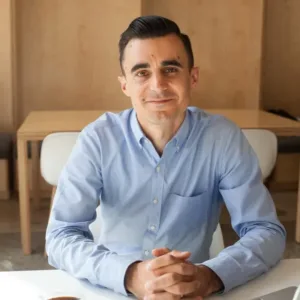
Dr. Connor McClenahan
Dr. Connor McClenahan, PsyD, is a licensed psychologist and the founder and Director of Here Counseling in Pasadena, CA. He has been featured in Parade, The Wall Street Journal and the SimplePractice blog.