
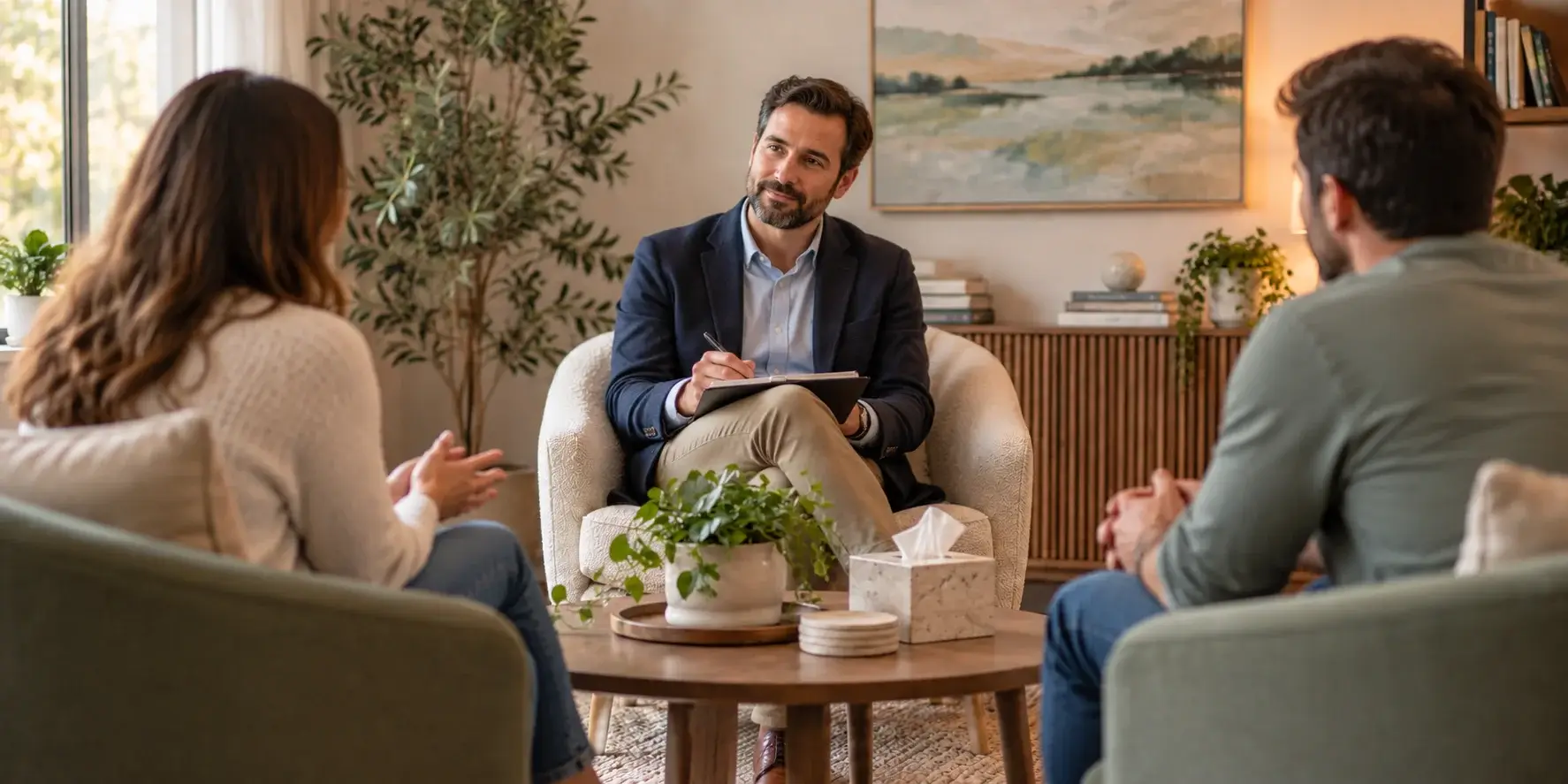
Walking into your first couples therapy session can feel uncomfortable, especially when you are unsure what your partner might say or how the therapist will respond. You may wonder whether you will have to discuss painful experiences, explain every disagreement, or defend your side of the relationship.
These concerns are understandable. Your first session is not about deciding who is right or wrong. It is an opportunity for both partners to feel heard, understand what has been happening in their relationship, and explore what they hope to change.
Knowing what to expect can help you approach that first appointment with greater confidence and openness.
What Happens During Your First Couples Therapy Session?
Your first couples therapy session typically begins with introductions and a conversation about what brought you to therapy. Your therapist may explain how sessions work, discuss confidentiality, and invite each partner to share their perspective.
You do not need to explain your entire relationship history in one appointment. The initial session helps your therapist understand your concerns, recognize important relationship patterns, and begin identifying goals you can work toward together.
Getting to Know Your Relationship
Your therapist may ask how you met, what initially brought you together, and how your relationship has changed over time. They may also ask about significant experiences that have strengthened your connection or created distance between you.
These conversations help your therapist understand your relationship beyond its current difficulties. Your shared history, individual experiences, and emotional needs all provide important context.
Understanding What Brought You to Therapy
You and your partner may have different reasons for seeking counseling. One person might feel emotionally disconnected, while the other is frustrated by recurring arguments or difficulty communicating.
Your therapist will help you explore these differences without expecting you to agree about everything immediately. Understanding both perspectives creates a starting point for your work together.
What Questions Will Your Couples Therapist Ask?
Many people worry about being asked difficult or deeply personal questions during their first appointment. Your therapist’s questions are intended to help them understand your experiences, emotional needs, and relationship dynamics.
Although every therapist approaches the initial session differently, certain questions are common.
Questions About Your Relationship History
Your therapist may ask:
- How did you meet, and what attracted you to each other?
- When did you first notice difficulties in your relationship?
- What experiences have brought you closer together?
- What do you appreciate most about your partner?
These questions help identify the strengths and experiences that have shaped your relationship, rather than focusing exclusively on what feels difficult today.
Questions About Communication and Conflict
Your therapist will likely want to understand how you communicate when disagreements arise. This may include exploring what each partner feels, how arguments begin, and what happens afterward.
For example, one partner may seek immediate reassurance while the other needs space when conversations become overwhelming. This pursue-withdraw pattern can leave both partners feeling misunderstood, even when they genuinely want to reconnect.
Understanding these patterns can help you recognize the emotions beneath your disagreements.
Questions About Your Goals
Your therapist may ask what you hope will be different after several months of counseling. One partner may want to rebuild trust, while the other wants to feel more emotionally connected.
You do not need identical goals to begin therapy. The first session provides an opportunity to understand what matters to each of you and identify areas where meaningful change may be possible.
Will the Couples Therapist Take Sides?
One of the most common fears about couples therapy is that the therapist will agree with one partner and blame the other.
A couples therapist generally works to understand both perspectives and recognize patterns that contribute to relationship difficulties. They may challenge particular behaviors or beliefs without assigning responsibility for every disagreement to one person.
However, neutrality does not mean overlooking harmful behavior. When abuse, intimidation, or coercive control is present, joint couples therapy can create additional safety risks. Individual support and safety planning may be more appropriate.
The goal is to create an environment where difficult experiences can be explored with care and appropriate boundaries.
Will We Meet With the Therapist Separately?
Some couples therapists schedule individual conversations with each partner as part of their initial assessment. Others begin with joint sessions and arrange individual meetings only when necessary.
Separate conversations can provide space to discuss personal history, relationship concerns, or experiences that feel difficult to express in front of your partner.
Your therapist should explain their approach to confidentiality, including how information shared during individual conversations is handled and any limits to privacy.
You can ask about these policies before beginning therapy so that both partners understand what to expect.
How to Prepare for Your First Couples Therapy Session
You do not need to rehearse conversations or prepare a detailed list of everything your partner has done wrong. Arriving with an open mind and a willingness to understand each other can make the first appointment more productive.
A few simple steps can help you feel prepared:
- Reflect on the main concerns you would like to discuss.
- Consider what you appreciate about your partner and your relationship.
- Think about how you would like to feel differently in the future.
- Prepare questions about your therapist’s approach or the counseling process.
It may also help to discuss what each partner hopes to gain from attending. Understanding how to make couples therapy successful can help you approach the process with realistic expectations and a greater willingness to participate.
Remember that your therapist does not expect you to communicate perfectly. Difficulty expressing your feelings may be one of the reasons you are seeking support.
What Happens After the First Couples Therapy Session?
Your first appointment is usually the beginning of a longer conversation. Your therapist may recommend additional assessment, discuss possible treatment goals, or suggest areas you can begin exploring together.
Some couples leave their first session feeling relieved, while others experience uncertainty or difficult emotions. Both experiences are understandable, particularly when conversations bring attention to concerns that have remained unresolved.
You may receive a reflection exercise or communication practice to try between appointments, depending on your therapist’s approach. Meaningful relationship changes generally develop through ongoing conversations, awareness, and practice.
Begin Couples Therapy With Here Counseling
Finding a therapist who understands your relationship and helps both partners feel comfortable can make it easier to begin counseling.
Here Counseling provides couples therapy in Pasadena and Downtown Los Angeles, with compassionate therapists who help partners understand recurring patterns, navigate difficult emotions, and rebuild connection.
For couples who prefer the flexibility of meeting from home, online couples therapy in California offers another way to receive support.
Our Care Coordinator and AI Therapist Matcher can help you find a therapist who fits your relationship needs and preferences. Many clients can begin therapy within a week, depending on availability.
Whether you are struggling with frequent arguments, rebuilding trust, or simply hoping to feel closer, you do not have to navigate these challenges alone.
Ready to take the first step? Request a call with our Care Coordinator to find a therapist who fits your needs.
Frequently Asked Questions
How Long Is the First Couples Therapy Session?
Session lengths vary by therapist and practice. Some initial appointments are longer than regular sessions because they include relationship history, intake questions, and an explanation of the therapy process. Confirm the appointment length when scheduling.
What if My Partner Doesn’t Want to Attend Couples Therapy?
It is common for one partner to feel more ready for counseling than the other. An individual consultation can help you understand your concerns, explore ways to communicate your needs, and consider appropriate next steps without pressuring your partner.
What if We Argue During Our First Session?
Disagreements can happen during couples therapy, especially when discussing emotionally sensitive experiences. Your therapist may slow the conversation, help each partner express their feelings, and encourage a more constructive way of communicating.
Will We Have to Discuss Infidelity or Intimacy During the First Session?
You can discuss concerns about intimacy, betrayal, or other sensitive experiences at a pace that feels manageable. Your therapist may ask about important relationship events during the initial assessment while helping you determine how to approach difficult conversations.
Can We Attend Couples Therapy if We’re Not Married?
Yes. Couples therapy is available to partners at different stages of their relationships, including dating, engaged, married, and long-term unmarried couples. You do not need to be married or experiencing a relationship crisis to benefit from counseling.
Can Our First Couples Therapy Session Be Online?
Yes. Many couples begin therapy through secure online appointments. Choose a quiet, private space where both partners can participate comfortably, and make sure your therapist is licensed to provide services in your location.