
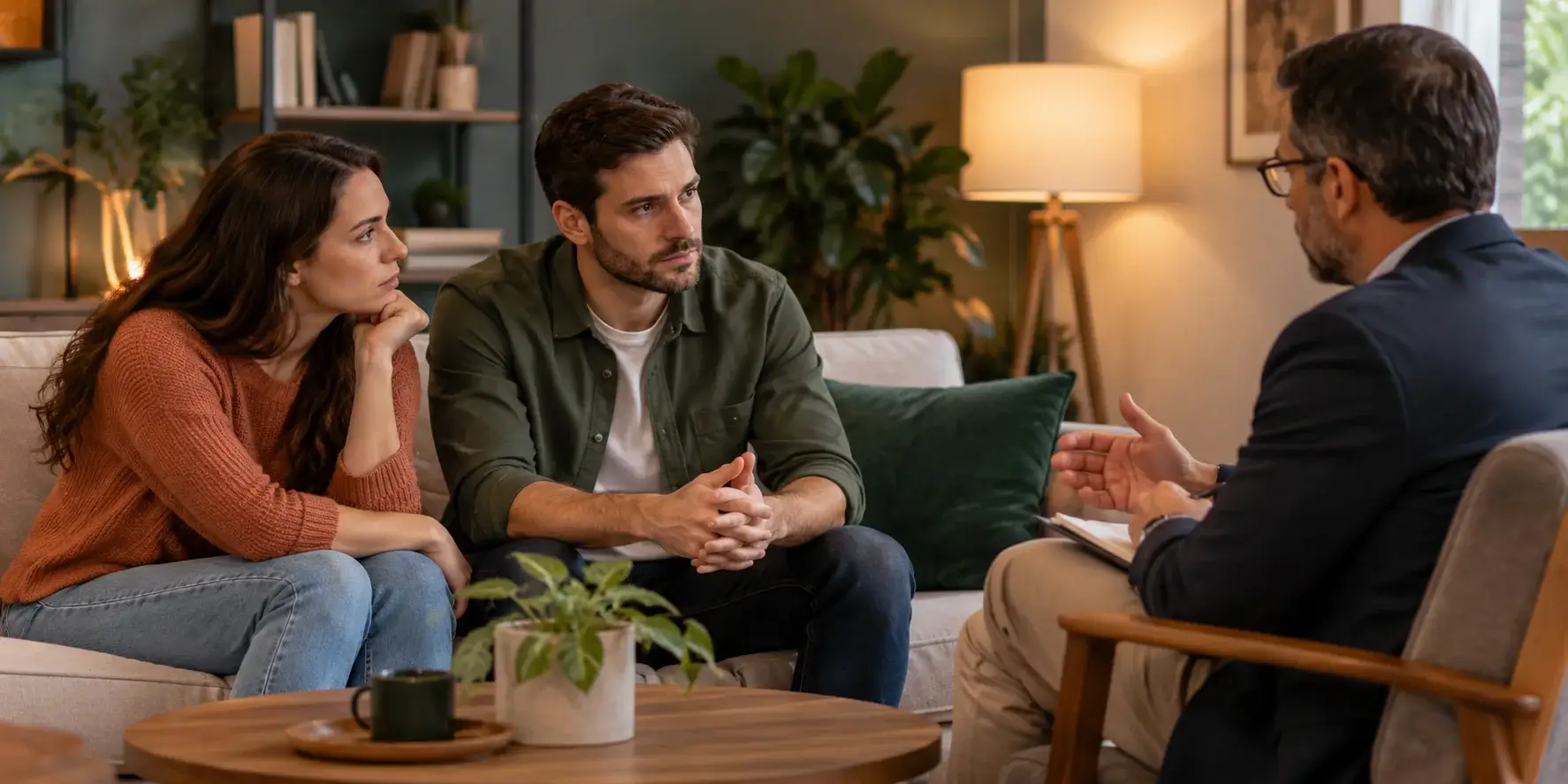
Every relationship goes through difficult moments. You may find yourselves having the same arguments, struggling to communicate, or feeling emotionally distant despite your efforts to reconnect. When you decide to seek professional support, another question often comes up: Should you choose couples therapy or marriage counseling?
The terms are frequently used interchangeably, and both approaches can help partners understand each other, address conflict, and build healthier relationships. The difference often has more to do with how the service is described than with the treatment itself.
Understanding what each involves can help you feel more confident about finding the right support for your relationship.
Is Couples Therapy The Same As Marriage Counseling?
Couples therapy and marriage counseling are closely related forms of relationship support. Both help partners explore difficulties, improve communication, understand emotional patterns, and work toward shared goals.
The main distinction is that couples therapy is a broader term covering married, unmarried, and engaged partners. Marriage counseling generally refers to support for people who are married, although some marriage counselors also work with unmarried couples.
| Couples Therapy | Marriage Counseling |
| Available to married and unmarried partners | Generally associated with married partners |
| Addresses communication, trust, intimacy, and recurring conflict | Addresses communication, trust, intimacy, and marital concerns |
| May explore deeper emotional and relationship patterns | May also explore deeper emotional and relationship patterns |
| Duration depends on the couple’s needs | Duration depends on the couple’s needs |
Neither term guarantees a particular treatment method or duration. A therapist’s training, experience, and approach are more important than whether they call their services couples therapy or marriage counseling.
What Problems Can Couples Therapy And Marriage Counseling Help With?
You do not need to be experiencing a relationship crisis to benefit from therapy. Some couples seek support after years of unresolved conflict, while others want to strengthen their connection before difficulties become harder to manage.
Both couples therapy and marriage counseling can address several common relationship concerns.
Communication Problems And Repeated Arguments
Sometimes, a simple disagreement becomes an argument that neither partner knows how to resolve. One person may feel criticized while the other feels ignored, creating a cycle of frustration and emotional distance.
Understanding why you shut down during arguments can help reveal the emotional reactions underlying these patterns. Therapy provides space to recognize these responses and develop healthier ways of communicating.
Emotional Distance And Trust Issues
You might live together and share daily responsibilities but still feel disconnected. Difficulties with intimacy, unresolved resentment, or betrayal can make it harder to feel emotionally safe with your partner.
Relationship therapy can help couples understand what has contributed to that distance, express difficult feelings, and explore what rebuilding trust might involve.
Major Life Changes And Different Expectations
Marriage, parenthood, financial pressures, and career transitions can change how partners relate to one another. Even positive changes can create tension when expectations and responsibilities are not clearly discussed.
Therapy gives couples an opportunity to understand their different perspectives and approach these transitions with greater awareness and mutual support.
How Do You Know Which Type Of Relationship Support You Need?
Choosing between couples therapy and marriage counseling does not have to be complicated. Instead of focusing on the terminology, consider what you want to change and what kind of support would feel helpful.
If you are experiencing frequent arguments, difficulty communicating, or emotional disconnection, a relationship therapist can help you identify the patterns contributing to these difficulties.
Couples who are preparing for marriage may benefit from premarital counseling, while partners facing separation or infidelity may need more focused support.
If you are wondering whether couples therapy really works , consider what you and your partner hope to gain from the experience. Progress depends on several factors, including your concerns, willingness to participate, and relationship with your therapist.
What Happens During Your First Couples Therapy Session?
Beginning therapy can feel uncomfortable, especially when you have been struggling to discuss difficult subjects at home. You may worry about being blamed, judged, or misunderstood.
Your first session is generally an opportunity for your therapist to understand your relationship, hear both partners’ perspectives, and identify the concerns that brought you to therapy.
Your therapist may ask about your relationship history, recurring disagreements, emotional needs, and goals. You may also discuss what has helped your relationship in the past and what feels difficult now.
Rather than deciding who is right or wrong, the therapist works to understand how your interactions contribute to conflict or disconnection. Together, you can begin identifying changes that support a healthier relationship.
How Long Does Couples Therapy Take?
The length of therapy depends on your relationship concerns, treatment goals, and how you respond to the process. Some couples benefit from a relatively brief period of support, while others need more time to work through longstanding difficulties.
Weekly sessions allow partners to explore relationship patterns and practice new communication skills between appointments.
For couples experiencing severe or recurring conflict, a structured approach such as a six-week couples therapy intensive provides extended couples sessions, individual support, and coordinated treatment.
What If Your Partner Doesn’t Want To Attend Therapy?
It is common for one partner to feel ready for therapy while the other is hesitant. Your partner may worry about being blamed, discussing private experiences, or whether counseling will actually help.
Try explaining what you hope to gain from therapy rather than focusing exclusively on what your partner needs to change. Sharing your feelings and listening to their concerns can make the conversation more constructive.
If your partner is not ready, individual therapy can still help you understand your emotional needs, clarify your boundaries, and explore how you want to approach the relationship.
If your relationship involves abuse, intimidation, or coercive control, joint counseling may be unsafe. Confidential individual support and safety planning are generally more appropriate in these circumstances.
How To Find The Right Couples Therapist
Finding someone who understands your concerns is an important part of beginning therapy. Look for a licensed mental health professional with relevant experience in couples work and an approach that feels appropriate for your relationship.
You can ask prospective therapists about their experience with communication difficulties, infidelity, attachment concerns, or recurring conflict. It is equally important that both partners feel comfortable discussing difficult emotions and participating in the therapeutic process.
The right therapeutic relationship can make it easier to explore painful experiences, recognize unhelpful patterns, and work toward meaningful change.
Couples Therapy And Marriage Counseling At Here Counseling
Relationships can become difficult when partners feel unheard, misunderstood, or disconnected. You deserve a space where both of you can explore these experiences with care and work toward greater emotional understanding.
Here Counseling offers couples therapy in Pasadena and couples therapy in Los Angeles , along with online therapy for eligible clients across California.
Our therapists help couples recognize recurring emotional patterns, navigate conflict, rebuild trust, and develop healthier ways of communicating. The team receives weekly training and supervision led by Dr. Connor McClenahan, a licensed clinical psychologist.
Finding the right therapist should not add more stress to an already difficult situation. Our AI Therapist Matcher and Care Coordinator can help you identify a therapist who fits your relationship’s needs, often without a long waitlist.
Whether you want to strengthen your connection or work through a challenging period, we can help you find a supportive place to begin.
Ready To Find The Right Therapist For Your Relationship?
Schedule an initial call with our Care Coordinator to explore your options for couples therapy or marriage counseling.
Frequently Asked Questions
Is Marriage Counseling Different From Couples Therapy?
The terms are often interchangeable. Couples therapy includes married and unmarried partners, while marriage counseling generally refers to married couples. Both can address communication difficulties, emotional disconnection, trust, and relationship conflict.
Do You Have To Be Married To Attend Couples Therapy?
No. Couples therapy is available to partners at different relationship stages, including dating, engaged, and married couples. Your therapist can tailor the treatment to your relationship concerns and goals.
Can Couples Therapy Help After Infidelity?
Couples therapy can provide a structured environment to process betrayal, explore the circumstances surrounding infidelity, and consider what rebuilding trust would require. Reconciliation is not guaranteed, and both partners have a voice in determining their relationship’s future.
Can I Go To Couples Counseling Alone?
If your partner does not want to participate, individual therapy can help you explore relationship concerns, understand your emotional responses, and clarify your needs. However, individual sessions are not the same as joint couples therapy.
Will A Couples Therapist Tell Us To Break Up?
A couples therapist generally helps partners understand their relationship, explore difficulties, and make informed decisions. Therapy is not necessarily about staying together. It can also help couples clarify whether they want to continue their relationship.
Does Insurance Cover Marriage Counseling?
Coverage depends on your insurance plan, the therapist, and the reason for treatment. Some plans may cover certain services when they are connected to a covered mental health diagnosis. Confirm your benefits and any out-of-pocket costs before beginning therapy.
Can We Attend Couples Therapy Online?
Yes. Online couples therapy allows eligible partners to receive professional support without regularly traveling to an office. It can be particularly helpful for busy schedules or couples who prefer meeting from home, provided they have a private, safe space for sessions.