
Stress does not always disappear when you finally have time to rest. You can sit down with nothing urgent to do and still feel your mind racing, your shoulders tight, or your attention moving from one worry to the next.
The right hobby gives your mind and body something gentler to focus on. Hobbies are not a cure for anxiety, but they can create moments of relief, connection, movement, creativity, and calm.
Why Hobbies Can Help With Stress And Anxiety
Anxiety often pulls attention toward possible problems. You may replay conversations, predict what could go wrong, or keep trying to solve something that cannot be solved right now.
A hobby brings you into a concrete activity. Repetition, sensory input, movement, creativity, and focused attention can help you reconnect with the present. Enjoyable activities can also give you something positive to anticipate when anxiety has made life feel narrow.
14 Hobbies That May Reduce Stress And Anxiety
There is no single best hobby for anxiety. Look for something accessible and absorbing that helps you feel more settled without becoming another responsibility.
1. Walking In Nature
Walking combines gentle movement with the sights and sounds around you. A park, trail, or quiet neighborhood can shift attention away from repetitive thoughts.
2. Gardening
Watering, planting, pruning, and touching soil give your hands a steady task. Gardening also has a slower rhythm that can feel grounding when your mind is moving too fast.
3. Knitting Or Crocheting
Repeated hand movements create a simple rhythm and give your attention somewhere specific to go. The activity does not have to produce anything perfect to be worthwhile.
4. Drawing, Painting, Or Coloring
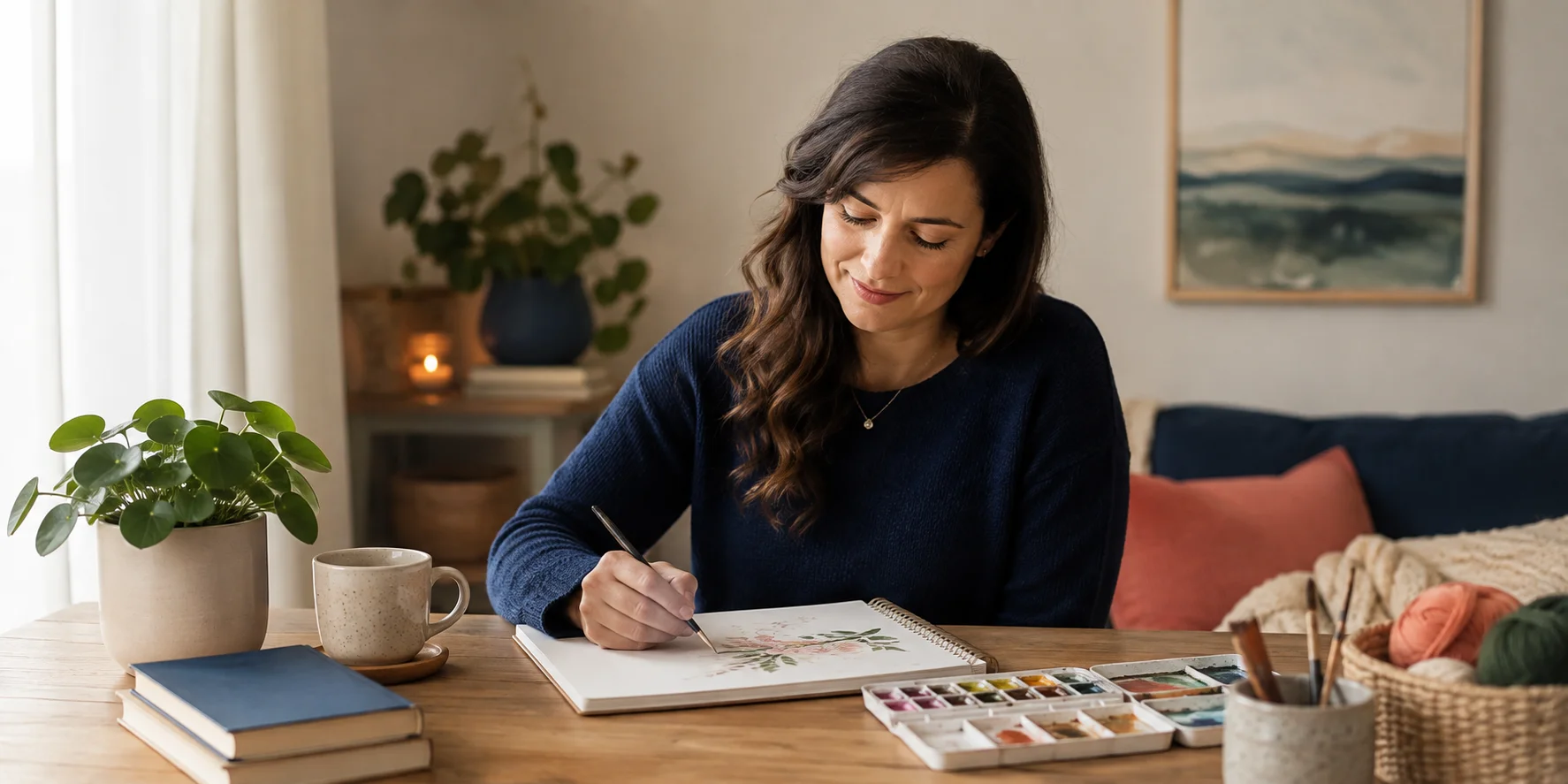
Creative activities let you focus on color, shape, texture, and movement instead of staying entirely inside your thoughts. The process can be calming even without artistic training.
5. Journaling
Writing can help when thoughts feel crowded or unfinished. Putting worries and emotions on paper may make them easier to observe rather than carry around all day.
6. Cooking Or Baking
Following a recipe engages smell, taste, touch, movement, and attention. Familiar meals can feel soothing because the steps are predictable.
7. Reading For Pleasure
Reading can pull your attention into another story or subject. Choose something you genuinely enjoy instead of turning downtime into another self improvement assignment.
8. Puzzles And Hands On Games
Jigsaw puzzles, crosswords, word games, and building sets give your mind a problem with clear boundaries. That can feel relieving when anxiety presents worries with no obvious endpoint.
9. Playing Music Or Singing
Music brings together attention, rhythm, and emotion. Singing or playing an instrument can give feelings another form of expression.
10. Yoga, Tai Chi, Or Gentle Stretching
Anxiety often appears physically through tension, shallow breathing, or restlessness. Gentle movement can help you notice those sensations without immediately pushing them away.
That body awareness also matters in somatic therapy, which explores how stress and emotion are experienced physically.
11. Dancing
Dancing combines music, movement, and expression. It can be helpful when sitting still makes you more aware of tension or restless energy.
12. Photography
Photography encourages you to notice light, color, texture, nature, and small details. Looking outward with curiosity can offer a break from internal worry.
13. Pottery, Clay, Or Tactile Crafts
Clay, sewing, woodworking, and similar crafts keep your hands involved in a tangible task. They also create room to experiment without needing polished results.
14. Volunteering Or A Gentle Group Hobby
A book club, community garden, choir, class, or volunteer role can create regular connection around a shared activity. This may help when stress has led you to withdraw from others.
Match The Hobby To How Your Anxiety Feels
Instead of asking which hobby is best, ask what you need in the moment. Different forms of stress may call for different kinds of activity.
If you feel restless, walking, dancing, gardening, or gentle movement may fit. If you cannot stop overthinking, knitting, puzzles, drawing, cooking, or music can give your attention a clearer place to land.
When you feel burned out, choose something with almost no setup. Reading a few pages, watering plants, coloring, stretching, or sitting outside may be more realistic than a complicated project.
If perfectionism is part of your anxiety, choose a hobby where being a beginner is allowed. Rest becomes harder when every activity turns into another test of whether you are doing enough.
Do Not Turn Your Hobby Into Another Job
A relaxing hobby can become stressful when you track every result, compare yourself online, buy equipment you feel obligated to use, or expect constant improvement.
Notice how you feel afterward. Feeling more present or settled is different from feeling behind, guilty, or pressured.
Screens can make this harder because scrolling fills quiet moments quickly. A digital detox for anxiety can create more room for activities that restore your attention.
Start Small Enough That It Still Feels Restful
When you are already stressed, starting a hobby can feel like one more thing to organize. Keep the first step small and inexpensive.
Try ten minutes of drawing, a short walk without a fitness goal, one simple recipe, a small puzzle, or a few pages of a book. Change hobbies if something consistently adds more pressure than relief.
When Hobbies Are Helpful But Not Enough
Hobbies can support emotional regulation, but they cannot always address why anxiety keeps returning. If worry is affecting your sleep, work, relationships, or ability to enjoy daily life, therapy can help you look beneath the symptoms.
Sometimes anxiety is connected to older experiences or a body that rarely feels settled. Understanding trauma induced anxiety can add context when ordinary calming strategies provide only temporary relief.
Therapy can help you notice patterns and build a greater sense of safety over time.
Find Anxiety Support At Here Counseling
Here Counseling supports adults dealing with anxiety, stress, panic, burnout, and trauma. Therapy is available in Pasadena, Downtown Los Angeles, and online across California.
Our Pasadena therapists provide warm, trauma-informed care that may include somatic therapy, psychodynamic therapy, and EMDR. Therapists receive ongoing training and supervision from Dr. Connor McClenahan, a licensed clinical psychologist.
Use the AI Therapist Matcher or schedule a call with our Care Coordinator to find a therapist who fits your needs. Many clients can begin therapy within a week.
Frequently Asked Questions
These common questions can help you choose a hobby without turning stress relief into another task.
What Hobbies Reduce Stress And Anxiety The Most?
There is no universal best hobby. Nature, movement, repetitive crafts, creative activities, music, and hands on tasks can all help depending on what feels calming and sustainable for you.
What Are The Best Hobbies For Overthinking?
Puzzles, knitting, cooking, drawing, gardening, music, and reading can help because they require enough attention to give repetitive thoughts somewhere else to go.
What Are Calming Hobbies I Can Do At Home?
Journaling, coloring, reading, puzzles, knitting, baking, music, plant care, and gentle stretching are easy options. Choose something with little preparation when your energy is low.
Can Hobbies Replace Therapy For Anxiety?
Hobbies can support stress management and emotional regulation, but they do not replace therapy when anxiety is persistent or significantly affecting daily life. Therapy can help you understand deeper patterns that may be keeping anxiety active.