
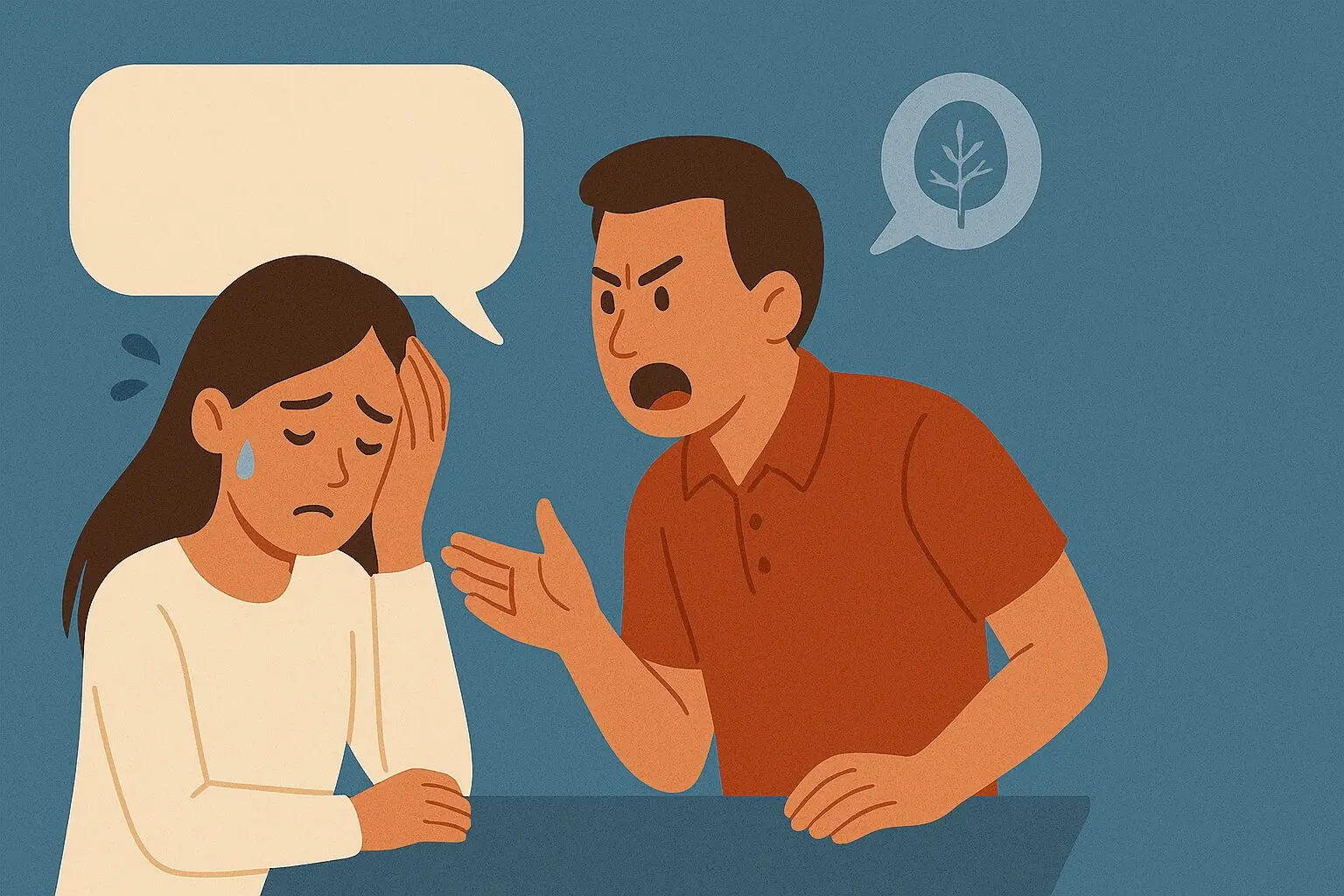
Arguments are a normal part of being human. But for many people, conflict doesn’t make them speak up — it makes them go silent.
Maybe you go completely blank and can’t find any words. Maybe your body feels heavy or numb. Maybe you feel yourself pulling inward, even though you desperately want to stay connected.
If this happens to you, you’re not alone — and you’re not broken.
Shutting down during arguments is often a nervous system response we see every week in couples therapy in Pasadena, not a communication problem. It’s your body trying to protect you, especially if conflict has ever felt dangerous in the past.
With understanding and support, you can learn to stay more present, grounded, and connected, even when conversations get hard.
This article gently walks you through why shutdown happens, how it affects your relationships, and what you can begin doing to shift the pattern.
And if you need extra support, our therapists in Pasadena and across California are here to help.
Why do I shut down during arguments?
When a fight starts, you do not choose silence. Your body freezes and the words drop out. That is not stonewalling. Stonewalling is walking away on purpose. This is your nervous system treating conflict as danger. You go blank because the system is trying to keep you safe, not because you stopped caring.
- Your mind goes blank
- You cannot find words
- You feel numb
- You lose eye contact
Many people feel ashamed of this pattern, but shame has no place here. If you shut down, it’s because your nervous system is doing exactly what it learned to do to protect you.
You’re not failing. You’re surviving.
Understanding the Freeze Response
To understand shutdown, we have to start with the body.
When conflict happens, your nervous system scans for danger — even if you’re talking with someone you love and trust. Most people know about the “fight or flight” response, but there are actually four survival strategies your nervous system may use: fight, flight, freeze, and fawn.
The freeze response is one of the most misunderstood. While fight and flight are active, freeze is the moment your body says, “I can’t get away and I can’t fight, so I’ll go still.” This can look like going quiet, feeling stuck, losing your words, or mentally checking out.
It’s not a choice. It’s biology.
Your Nervous System Is Trying to Protect You
When an argument feels threatening — even slightly — your brain can’t always distinguish between emotional danger and physical danger. If your system becomes overwhelmed or “flooded,” it shifts into survival mode.
You might feel:
- Your breath becoming shallow
- Pressure in your chest
- A floating or numb sensation
- A sense of fog or confusion
- A strong urge to withdraw or escape
These sensations are the body’s way of managing stress. They’re not signs of weakness. They’re signs that your body has been carrying something heavy for a long time.
Past Experiences Shape Your Reaction Today
Shutdown rarely appears out of nowhere. For many people, it’s rooted in earlier experiences where arguing or expressing emotion felt unsafe.
You might have learned to shut down if:
- You grew up around yelling, criticism, or unpredictable anger
- You were taught that conflict is dangerous or disrespectful
- You learned that staying quiet kept the peace
- You lived in a home where expressing feelings was discouraged
- You were punished or ignored when you tried to explain yourself
- You’ve been in previous relationships where conflict became harmful
Even if you’re in a healthy, loving relationship now, your body may still respond based on old wiring. The nervous system remembers what the mind forgets.
This is why so many people say, “I don’t know why this happens — I just shut down.”
Your body is doing exactly what it learned to do to survive.
Is It Normal to Shut Down During Arguments?
Yes. Completely.
Shutting down is a very common stress response. Many people experience it when conversations feel too fast, too intense, too emotional, or too threatening to their nervous system. It’s especially common if you’ve experienced trauma, chronic stress, or attachment wounds.
But common doesn’t mean easy.
Shutdown can make you feel stuck, misunderstood, or disconnected from your partner. Even when you care deeply, it may look like you don’t care at all. It can leave you feeling ashamed afterward, wondering why you couldn’t just “say something.”
Here’s the truth:
- You’re not doing this because you don’t care.
- You’re doing this because your body is overwhelmed.
When you begin to understand that, compassion and healing can finally begin.
How Shutting Down Affects Your Relationships
When you shut down, it impacts both you and your partner in different ways.
What It Feels Like for You
Shutting down can leave you feeling trapped inside yourself. Afterward, you might feel:
- Embarrassed that you couldn’t express yourself
- Frustrated that your needs weren’t understood
- Guilty for withdrawing
- Sad that things didn’t get resolved
- Confused about what happened
- Tired, drained, or emotionally numb
You might replay the argument in your head later, thinking of everything you “should have said.” This can be painful and isolating.
What It Looks Like to Your Partner
Your partner may misinterpret the shutdown. They might believe:
- You don’t care
- You’re avoiding responsibility
- You’re punishing them
- You’re done with the relationship
- You don’t want to fix things
What’s happening inside you and what they’re seeing on the outside can be two completely different worlds.
This mismatch can create cycles where both people feel hurt, even though neither is trying to hurt the other.
When Trauma, Anxiety, or Depression Are Involved
Shutdown can also overlap with:
- Trauma triggers
- Anxiety or panic
- Emotional flooding
- Depression-related numbness
- Dissociation
- Attachment wounds
If conflict consistently sends your body into overwhelm, it may be a sign that deeper emotional experiences are still alive in your system — and can be gently worked through with a therapist.
How Do I Stop Shutting Down During Arguments?
Here’s the good news: this pattern can change. Not overnight, but with awareness, compassion, and practice, you can build the ability to stay more present during difficult conversations.
Below are gentle tools you can start with.
Notice Your Early Cues
Shutdown usually doesn’t appear out of nowhere. Your body gives small signals before it fully shuts down.
You might notice:
- Tightness in your chest
- Heat in your face
- Your breath becoming shallow
- A feeling of pressure or heaviness
- Sudden confusion
- Wanting to escape
- Feeling like your thoughts are slowing
Catching these early moments helps you intervene before the full shutdown hits.
Use Your Body to Come Back Online
Because shutdown is a nervous system reaction, you often can’t “think your way” out of it. Your body needs help first.
Small grounding practices can help:
- Feel your feet against the floor
- Put one hand on your chest and one on your stomach
- Take slower, longer exhales
- Look around the room and name a few things you see
- Sit back against a chair and feel the support
These practices send signals of safety to your nervous system.
Ask for a Pause Without Disappearing
Taking a break isn’t avoidance — it’s regulation.
A simple script you can use:
“I’m starting to feel overwhelmed. I care about this, and I want to come back to it. I just need a few minutes to settle.”
The key is to name when you’ll return to the conversation. That helps your partner feel secure and not abandoned.
Practice Repair After You Shut Down
Repair is one of the most healing skills for couples.
After things settle, come back and share — gently — what was happening inside you.
You might say:
- “I wanted to talk, but I felt stuck.”
- “I wasn’t ignoring you. I was overwhelmed.”
- “I need time to regulate before I can stay connected during conflict.”
Repair builds understanding and trust over time.
When Is It Helpful to Seek Therapy?
You don’t have to wait until things feel unmanageable. Therapy can help if:
- You shut down during most conflicts
- You feel terrified of anger or raised voices
- You avoid conversations because you fear becoming overwhelmed
- Shutdown leads to repeated misunderstandings
- You grew up in a home where conflict wasn’t safe
- You sense trauma may be beneath the pattern
- Your partner feels hurt or confused by your withdrawal
You deserve relationships where you can stay present, speak your truth, and feel safe.
How Therapy Helps You Stay Present in Conflict
At Here Counseling, we work with many clients who experience shutdown as a trauma or stress response. Our therapists in Pasadena use evidence-based approaches that help shift this pattern from the inside out.
Somatic Therapy
Somatic therapy helps you build capacity in your nervous system so you can tolerate discomfort without shutting down.
Attachment-Focused Therapy
Helps you feel safer being vulnerable, expressive, and emotionally connected.
Couples Counseling
Couple counseling helps both partners understand what’s happening, reduce blame, and create new ways to communicate.
Healing is possible. And you don’t have to navigate it alone.
Working With a Therapist in Pasadena
If shutting down during conflict has become a familiar pattern, therapy can help you understand where it comes from and give you tools to stay more connected in the moments that matter most.
At Here Counseling, you’ll get support finding the right therapist quickly, without waitlists. Our Care Coordinator will listen to what you’re experiencing and match you with someone who understands how to work with shutdown, nervous system overwhelm, trauma, conflict patterns, and communication issues. Our AI Therapist Matcher can also help you find the right fit.
We offer:
- In-person therapy in Pasadena
- Online therapy for anyone in California
- Warm, trauma-informed therapists trained in EMDR, somatic therapy, and psychodynamic care
- A safe, supportive space to find clarity, relief, and confidence
If you’re ready to understand yourself more deeply — and feel more grounded during conflicts — we’re here to help.
Schedule a call with our Care Coordinator to find the right therapist for you.
FAQs
No. Stonewalling is a conscious choice to disengage or punish a partner. Shutting down is involuntary — a nervous system freeze response that happens when you feel overwhelmed or unsafe.
Not always, but trauma, attachment wounds, and past experiences with unsafe conflict often play a big role. Even if you’re not aware of trauma, your body may be responding to old patterns.
Try sharing it gently outside of conflict. For example: “When I shut down, I’m not trying to avoid you. I get overwhelmed and I freeze. I’m working on understanding it.”
You can make progress with awareness, grounding tools, and communication skills. But if shutdown feels automatic or deeply rooted, therapy can offer deeper healing and support.
Our therapists specialize in trauma therapy, EMDR, somatic work, and relationship healing. We help you understand the root of your shutdown and build the capacity to stay present, connected, and grounded during hard conversations.